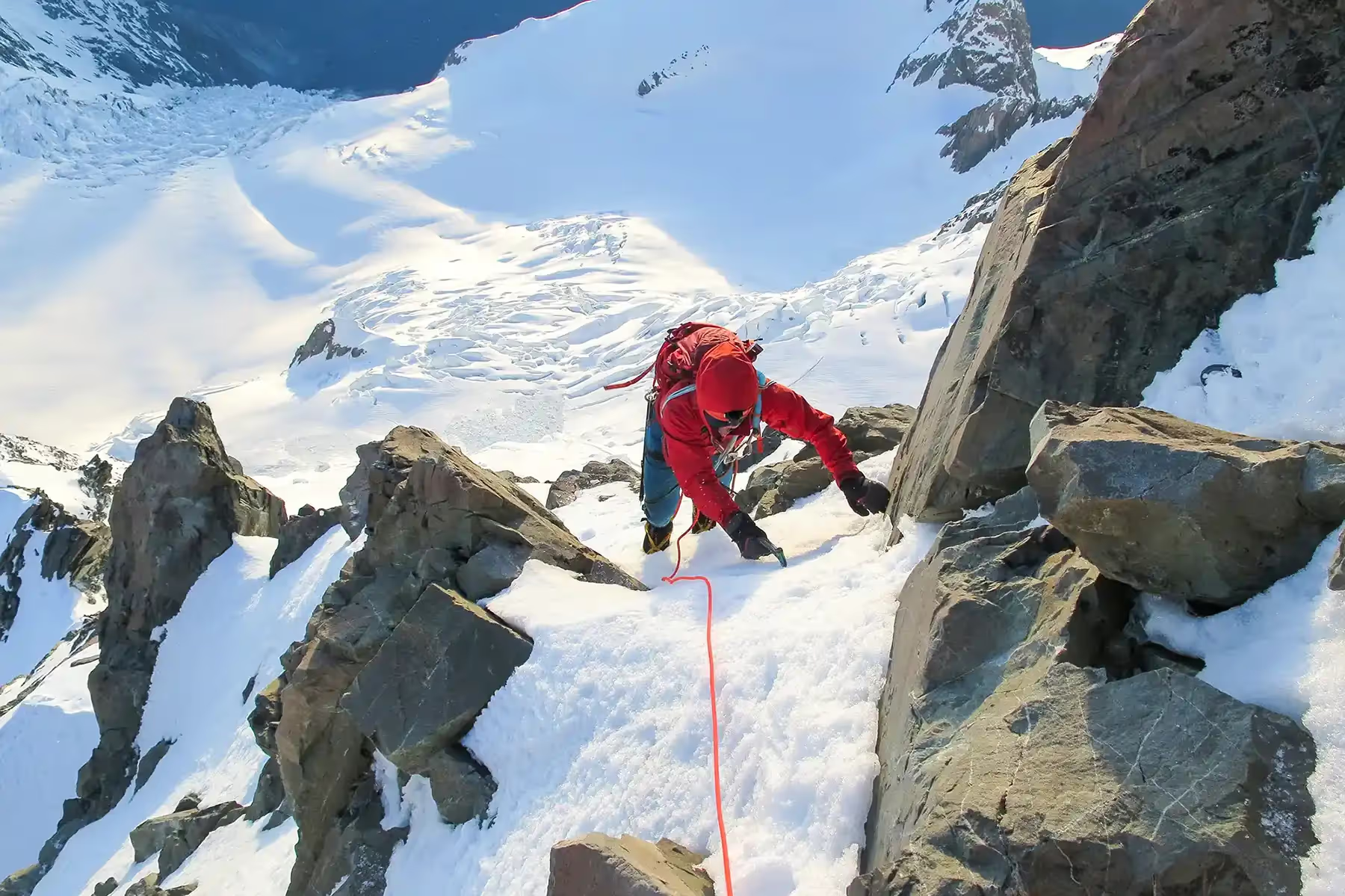
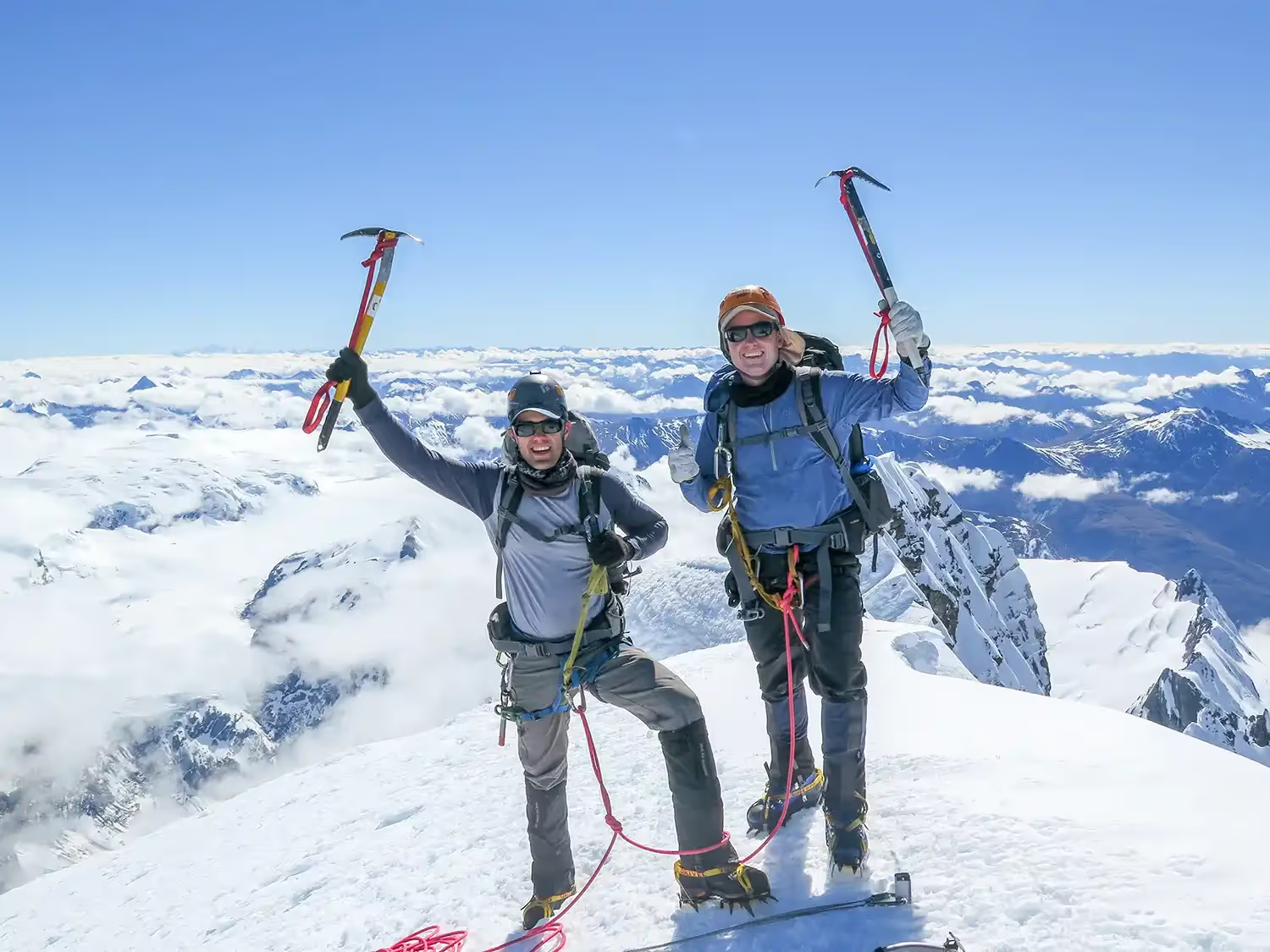
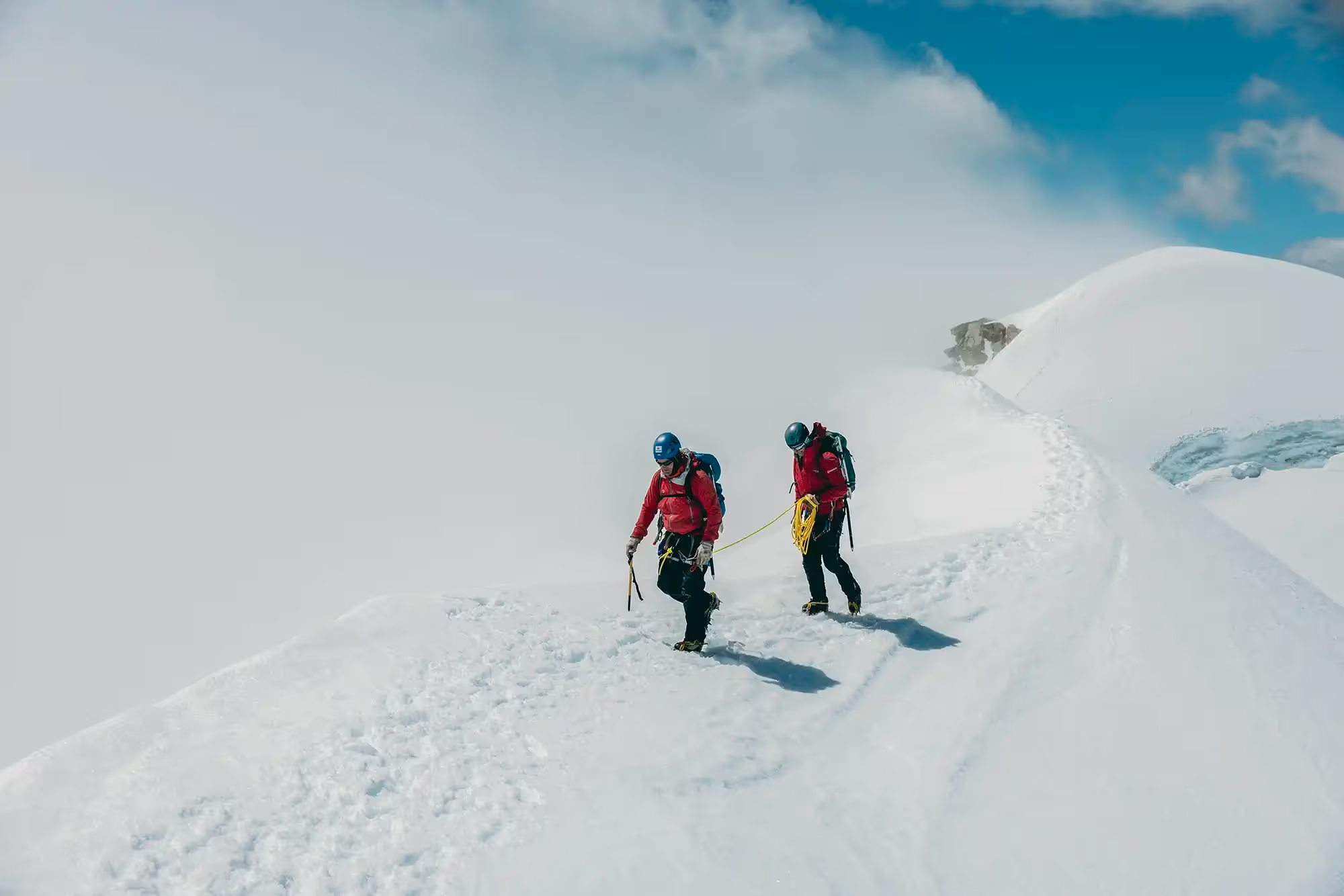
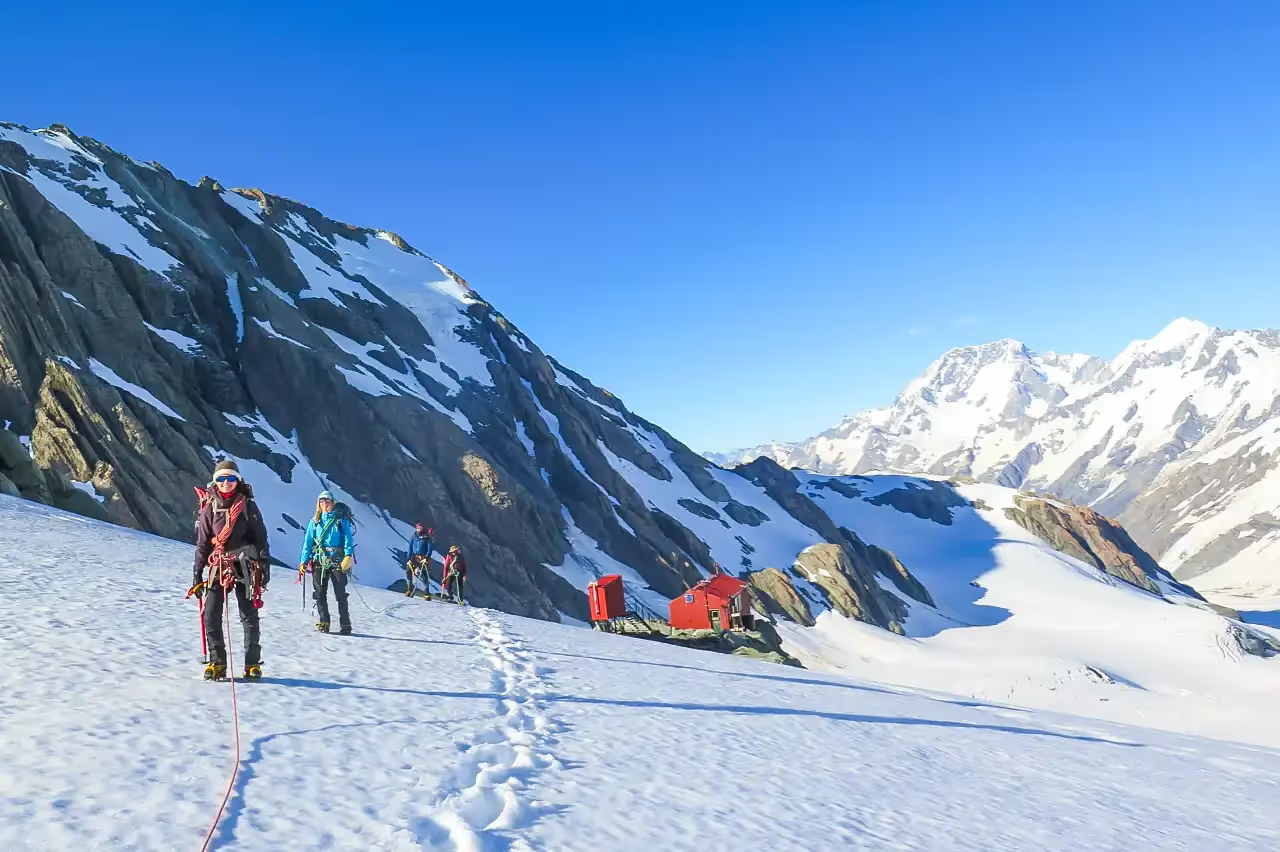
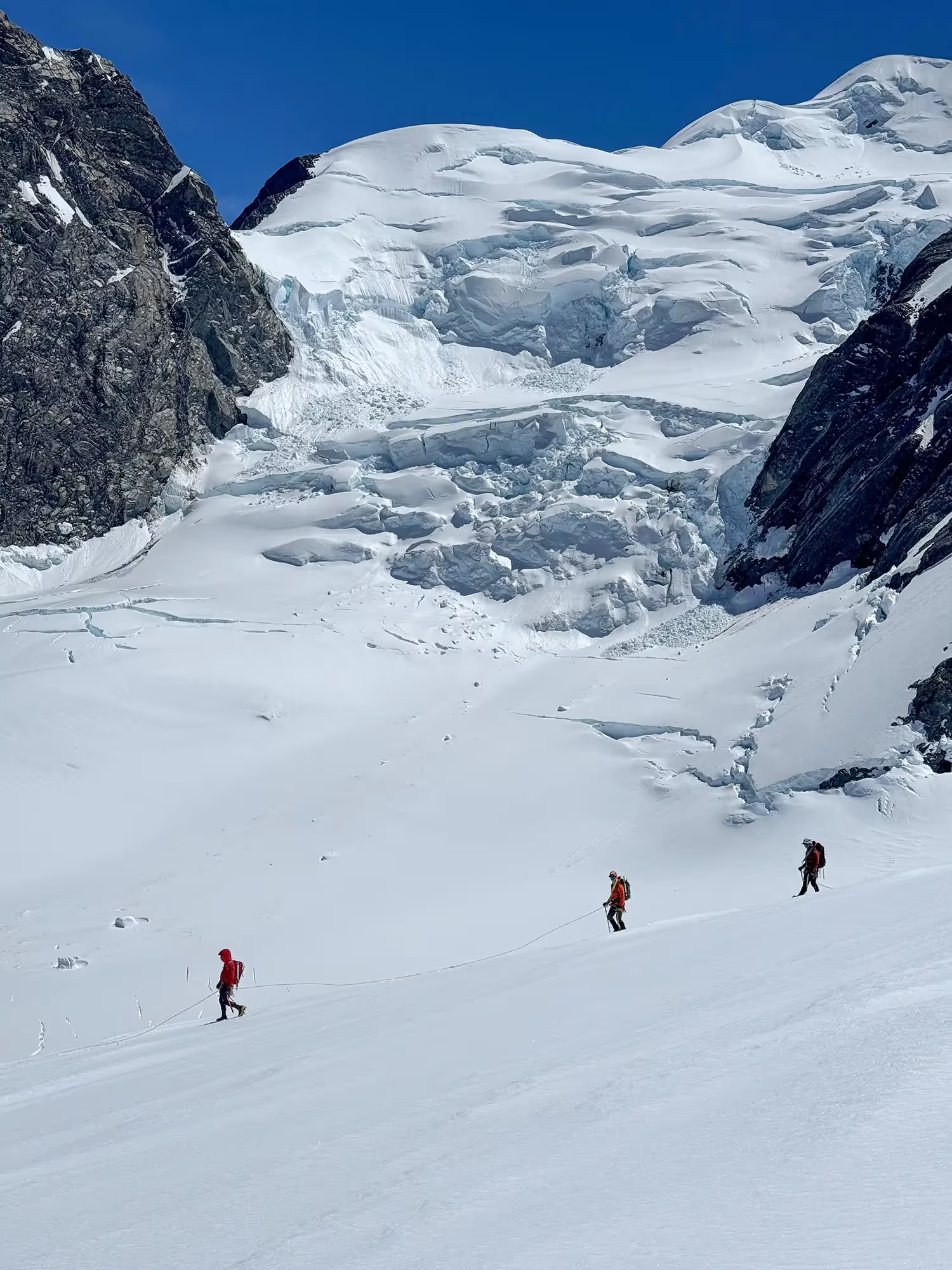
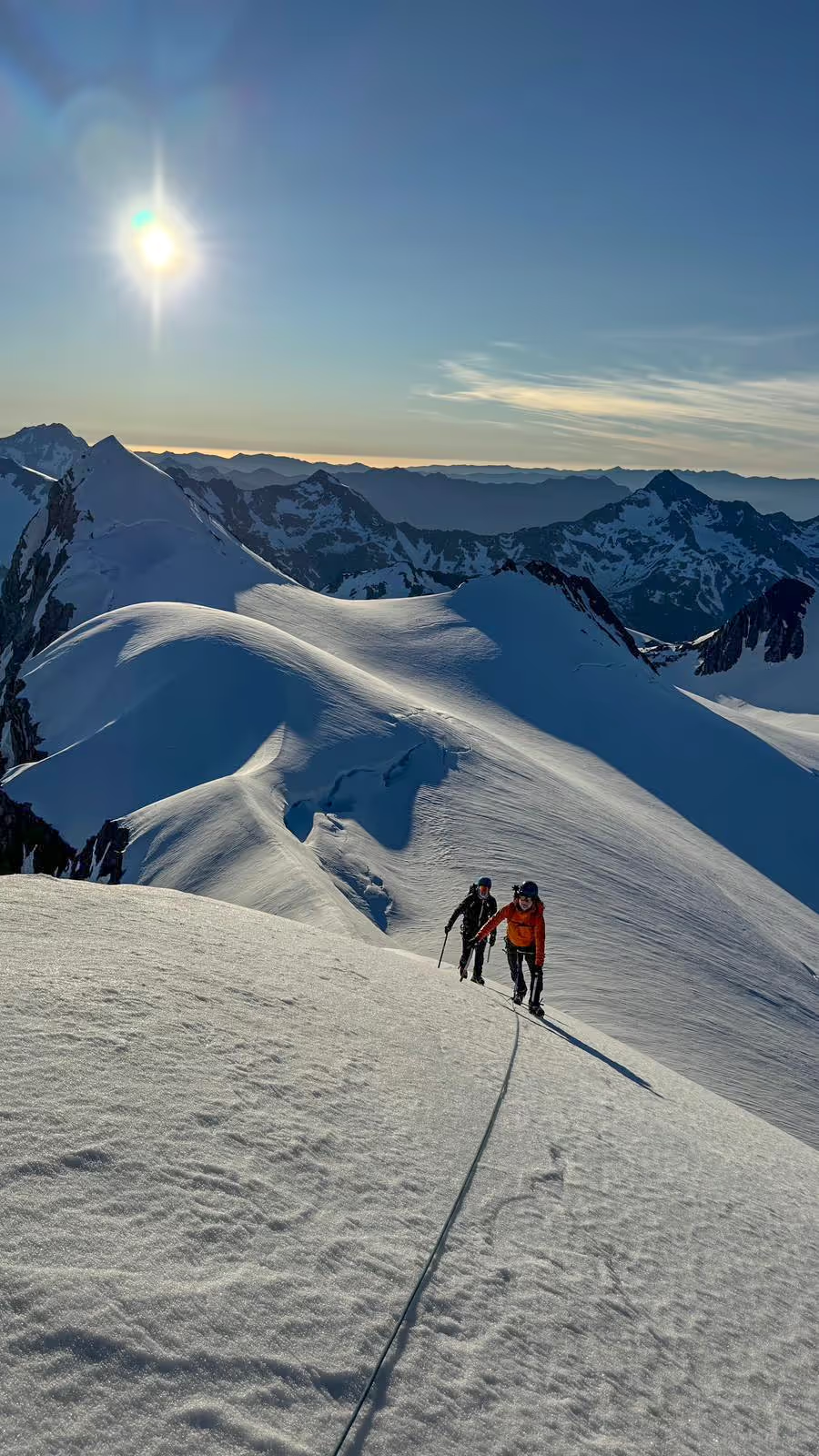
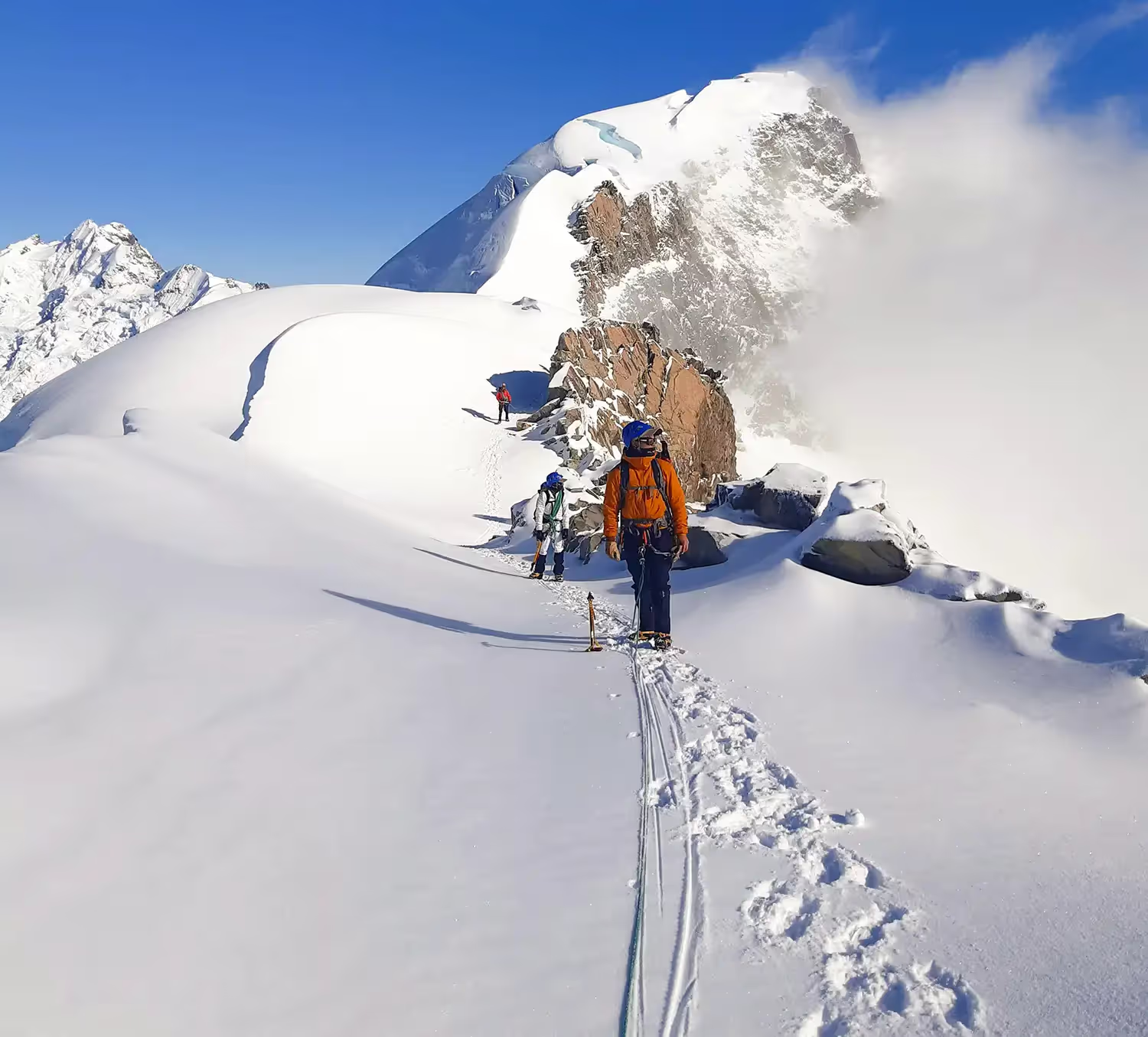
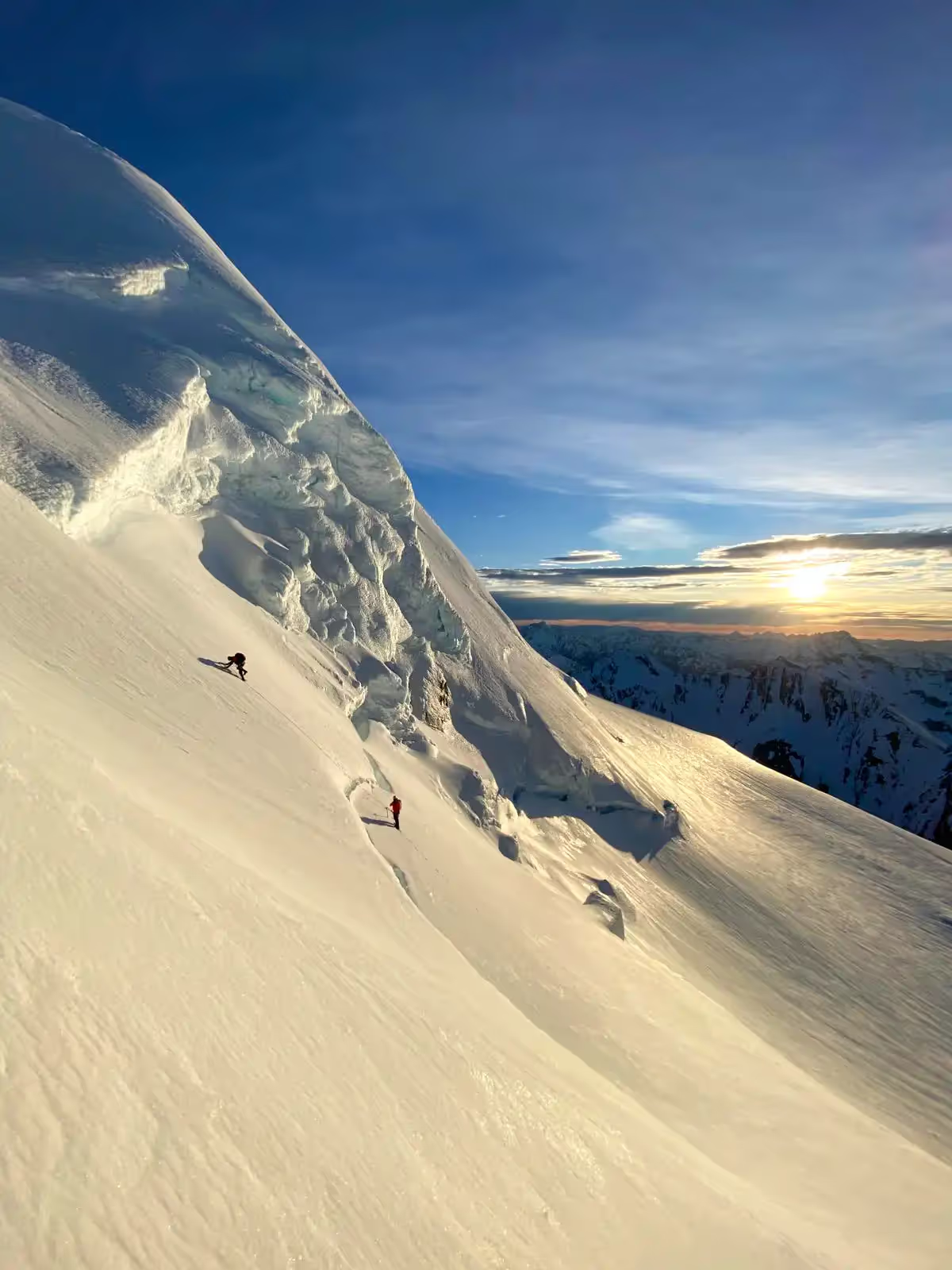
Perched at the head of the Tasman Glacier, Hochstetter Dome is a classic Aoraki Mount Cook objective. Based from the conveniently located Tasman Saddle or Kelman Huts, the climb involves a 500-metre vertical ascent over moderate but serious glaciated terrain.
A typical day begins with a civilized breakfast, reaching the summit in time for lunch. While the climbing is straightforward, confident crampon and ice axe skills are essential for a safe round-trip of 6–8 hours.
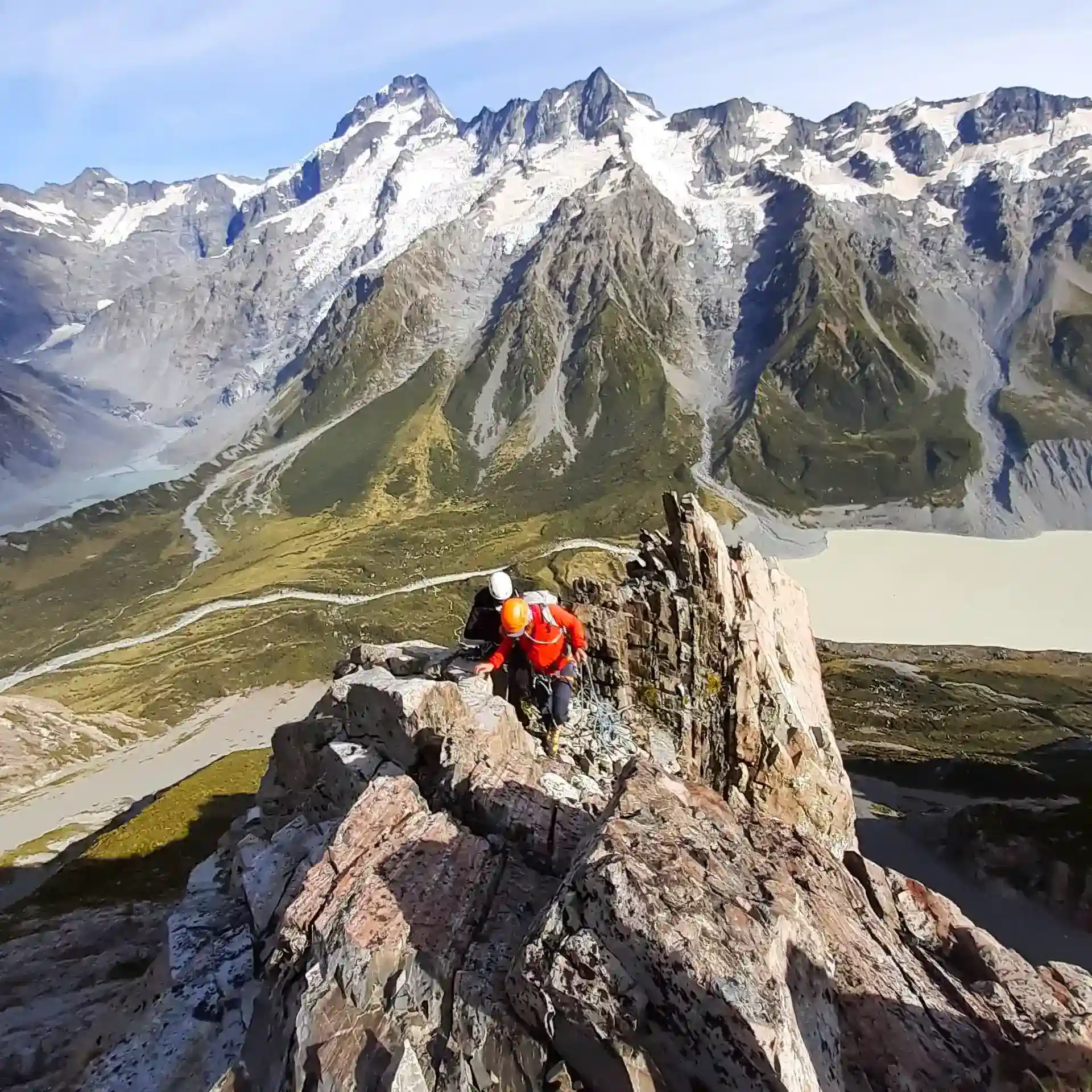
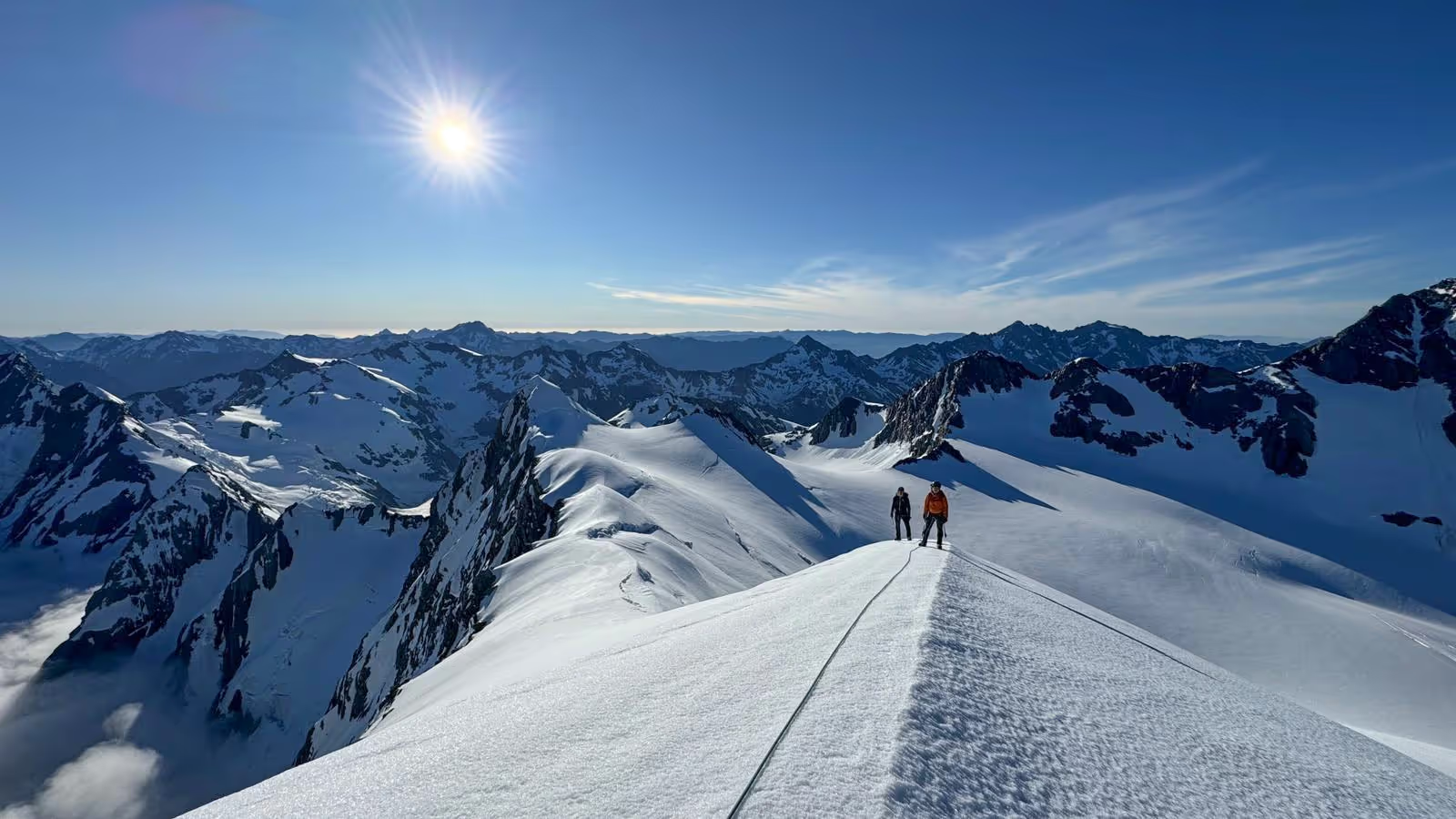
Twin Peaks: Traverse the breathtaking 500-metre ridge connecting the Dome’s two summits.
The View: On clear days, the 1,400-metre drop into the Whymper Glacier reveals a stunning contrast between high-alpine ice and the temperate forests of the West Coast.
Extended Objectives: Stronger teams may include Mount Aylmer (2,699m) for a complete east-to-west traverse.
The Winter Bonus: For capable ski mountaineers, the descent offers a spectacular 1,000-metre run from the Hochstetter Shoulder to the lower Tasman Glacier!






![“Ascent of the Hochstetter Dome” [March 1883]. [Drawn by] F.Schell [Melbourne, Picturesque Atlas Publishing Company, 1886]. Permission of the Alexander Turnbull Library, Wellington, New Zealand, must be obtained before any re-use of this image.](https://cdn.prod.website-files.com/695702d2108d8fe84cc95afe/69865f313670bec63d62bcbf_nlnzimage%20copy.avif)