trip overviewplan your triptrip itinerarybook nowMake An Enquiry
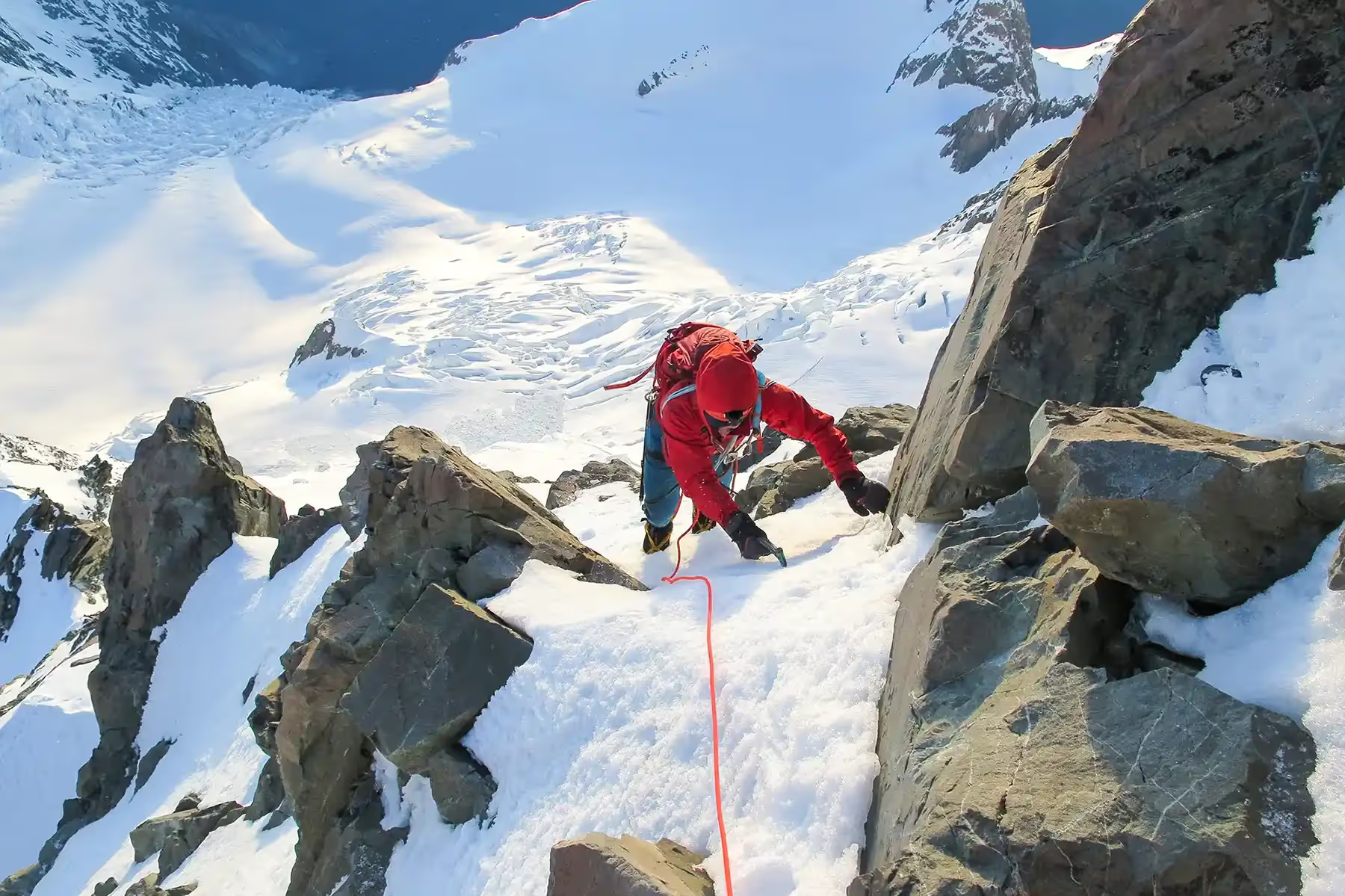
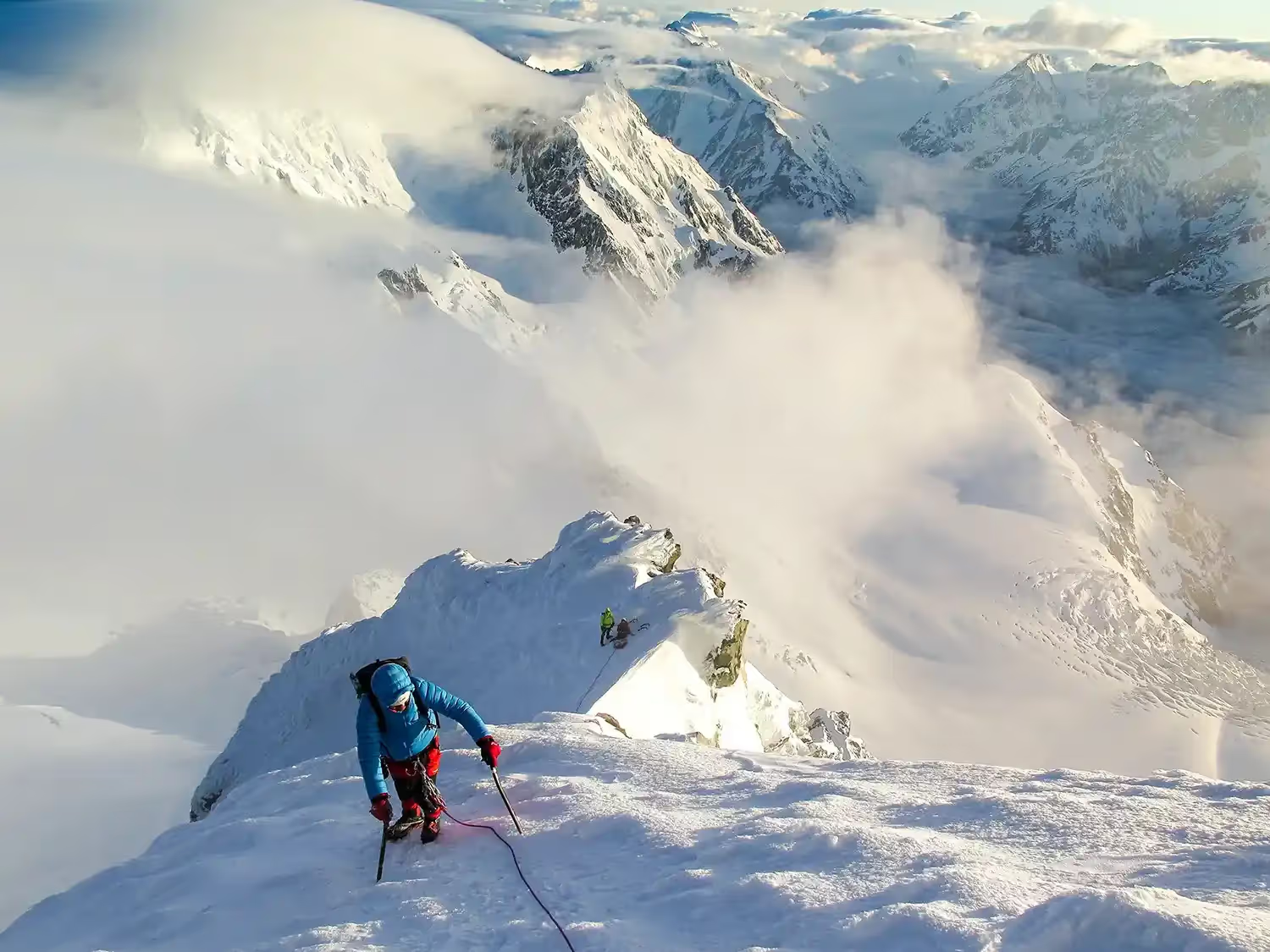
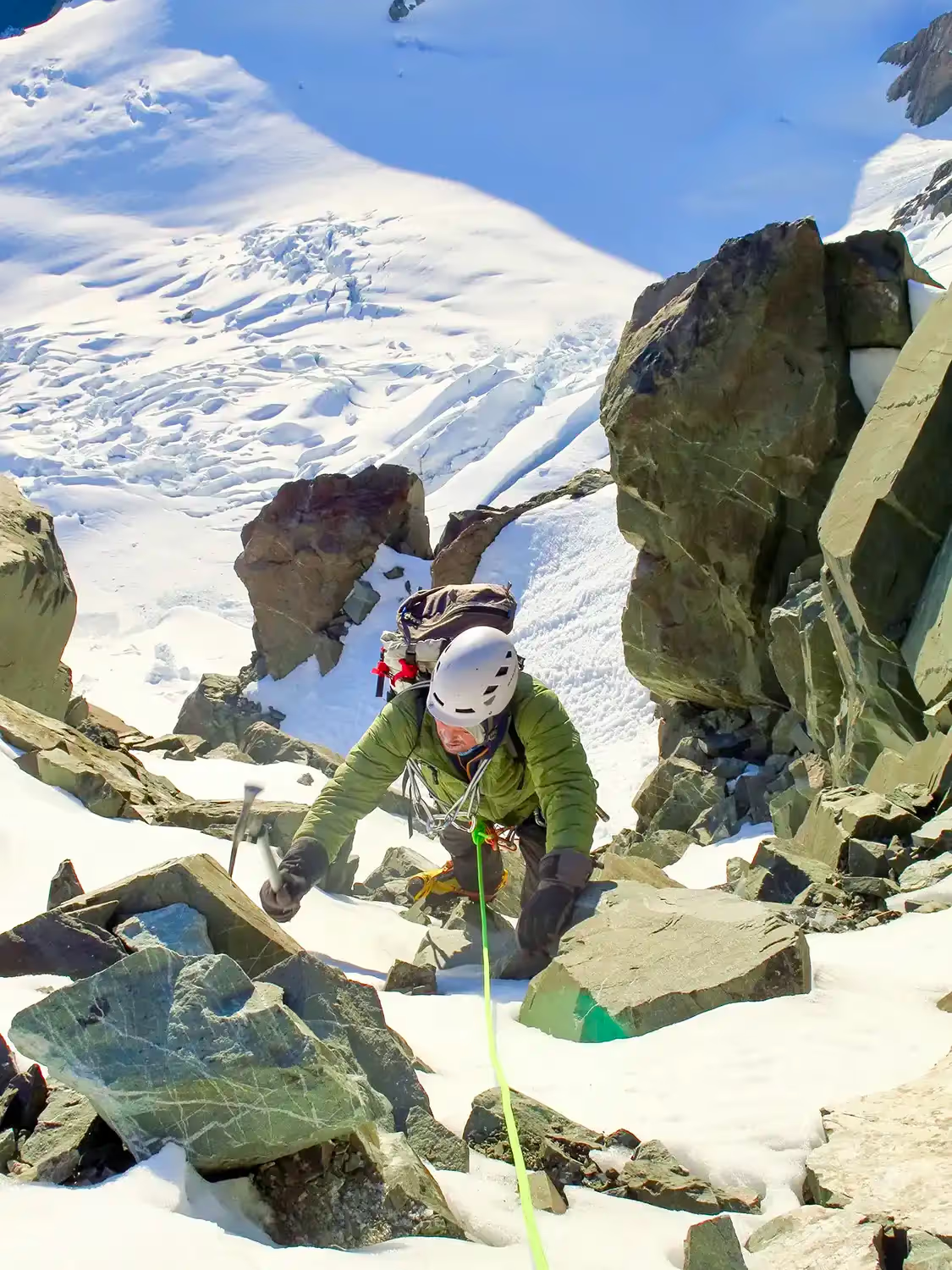
Guest ascending snowy slope using ice axe and crampons

Aoraki Mount Cook

Inspiring climbers since the 1890s.

Climb Aoraki Mount Cook, NZ's highest peak - 3,724 metres

Whaia te iti kahurangi, ki te tuohu koe, me he maunga teitei, ko Aoraki anake.
If you must bow your head, let it be only to the lofty mountain, Aoraki.

Aoraki is New Zealand’s highest point, but its modest elevation on paper is famously deceptive. For the international mountaineer, this is a "low altitude" peak with high-altitude consequences. Rising directly from near sea level, the vertical relief, massive glaciation, and notoriously robust weather of the "Roaring 40s" create a challenge that rivals much higher summits worldwide.

A Serious Undertaking
Make no mistake: Aoraki is a high-commitment objective. It demands peak physical conditioning, technical efficiency, and a deep respect for the environment. Because of the objective hazards and the sustained nature of the climb, guided ascents are exclusively available to returning Alpine Guides guests who have demonstrated the required skills and "mountain sense" on our prerequisite peaks.

The Route: Linda Glacier & North East Ridge
The main guided line to the summit is via the Linda Glacier from Plateau Hut. It involves a complex, active glacial system that remains a serious undertaking from start to finish. In addition, objective hazards exist from ice and rockfall, meaning there is no time to linger. A consistent pace over many hours is mandatory.

The Climb: Expect a  15–18 hour round trip from Plateau Hut.

The Gain: You’ll tackle 1,700 vertical metres of sustained alpine terrain.

The Commitment: From navigating the Linda’s crevasse maze, to the technical focus of the North-East Ridge, there is little margin for error.

This is a climb for the seasoned mountaineer who understands that in the Southern Alps, character and commitment count for more than altitude.

trip level
Expert
guide ratio
1:1
duration
6 Days
season
October to December
Group Size
Max 1
start location
Alpine Guides' base, Aoraki Mount Cook
start and finish time
8:30 AM (first day) 5:00 PM (last day)
mountain Access
Aircraft
Click for more info
price
NZ $11,995 per person
book nowMake An Enquiry
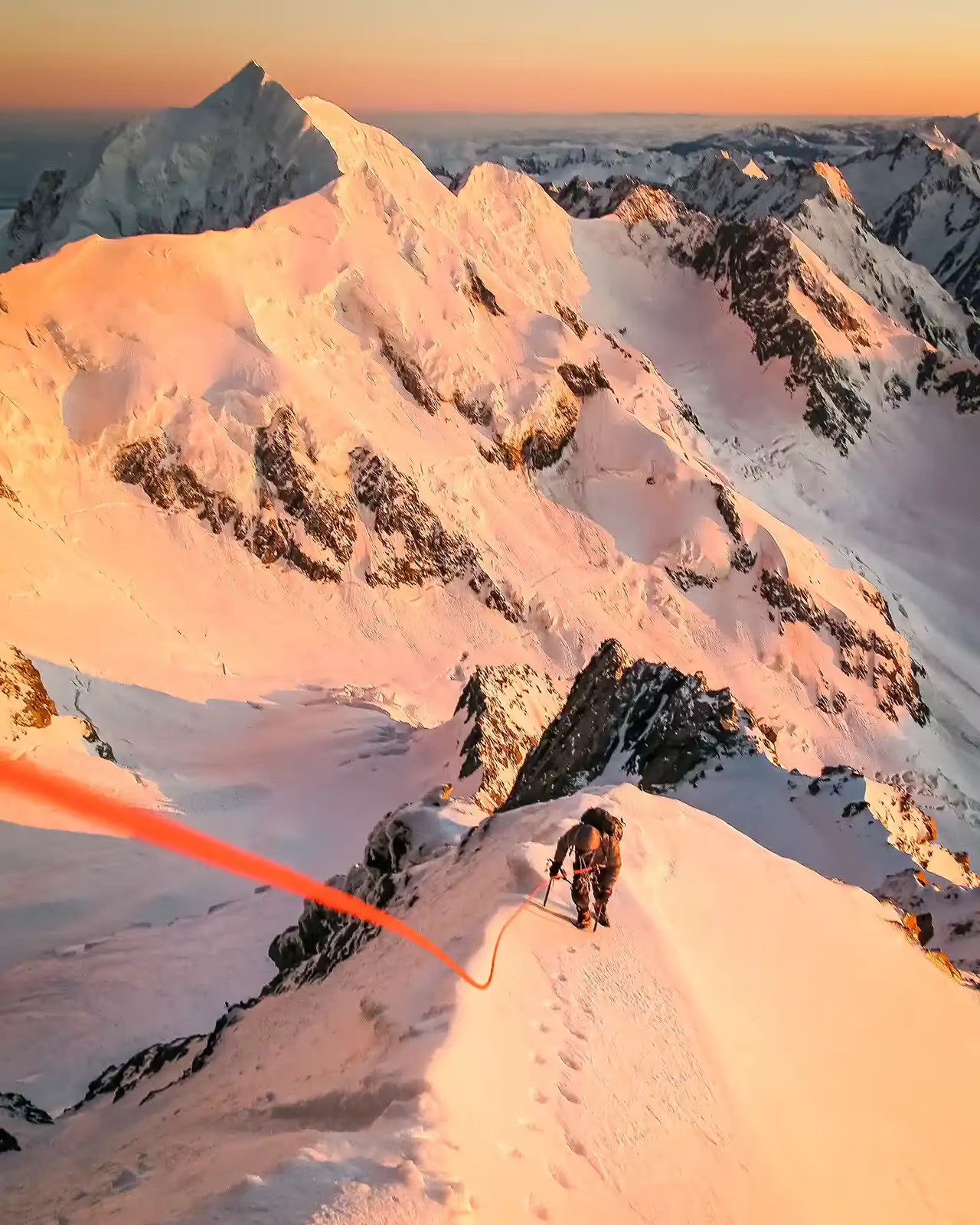
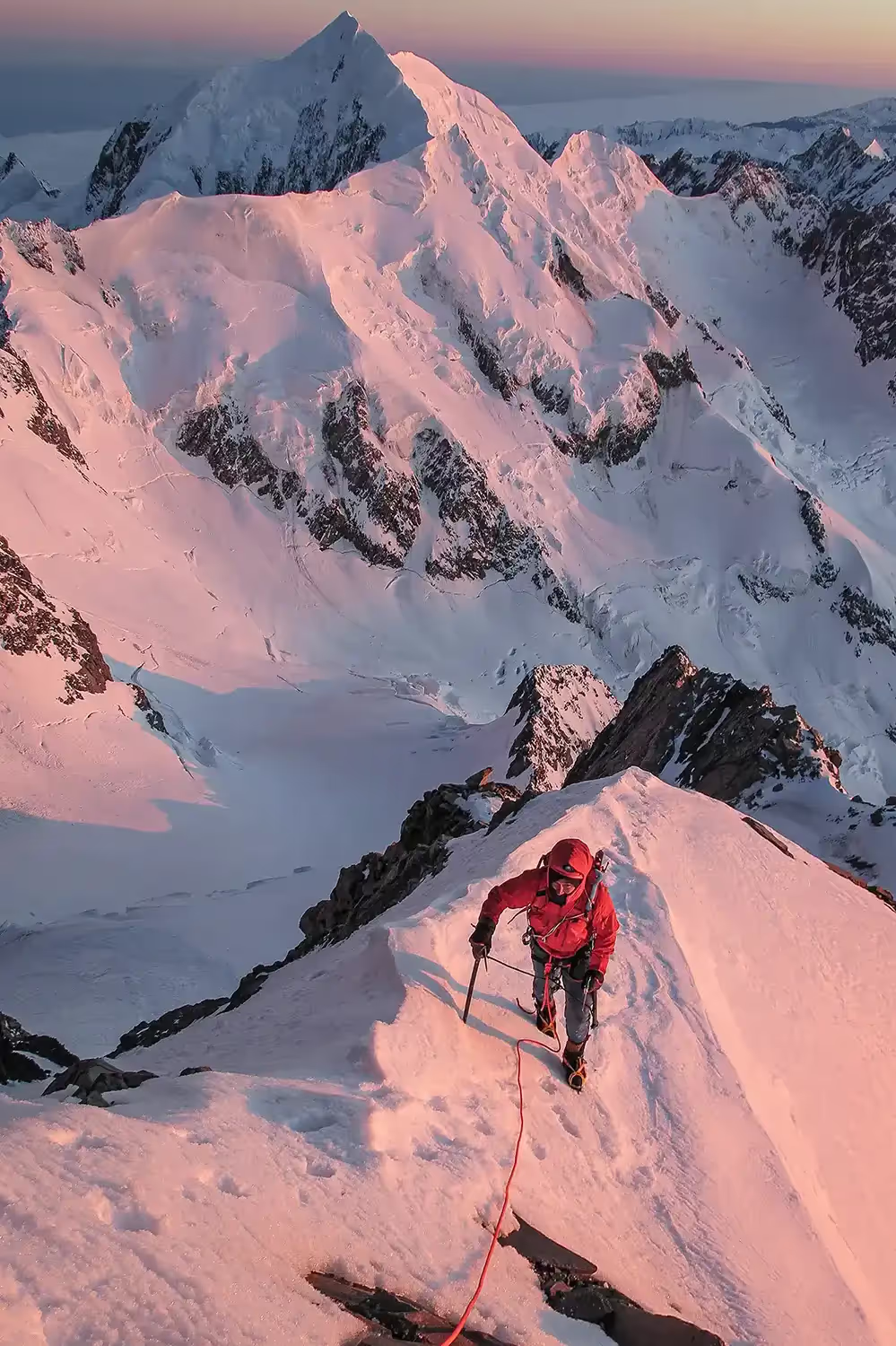
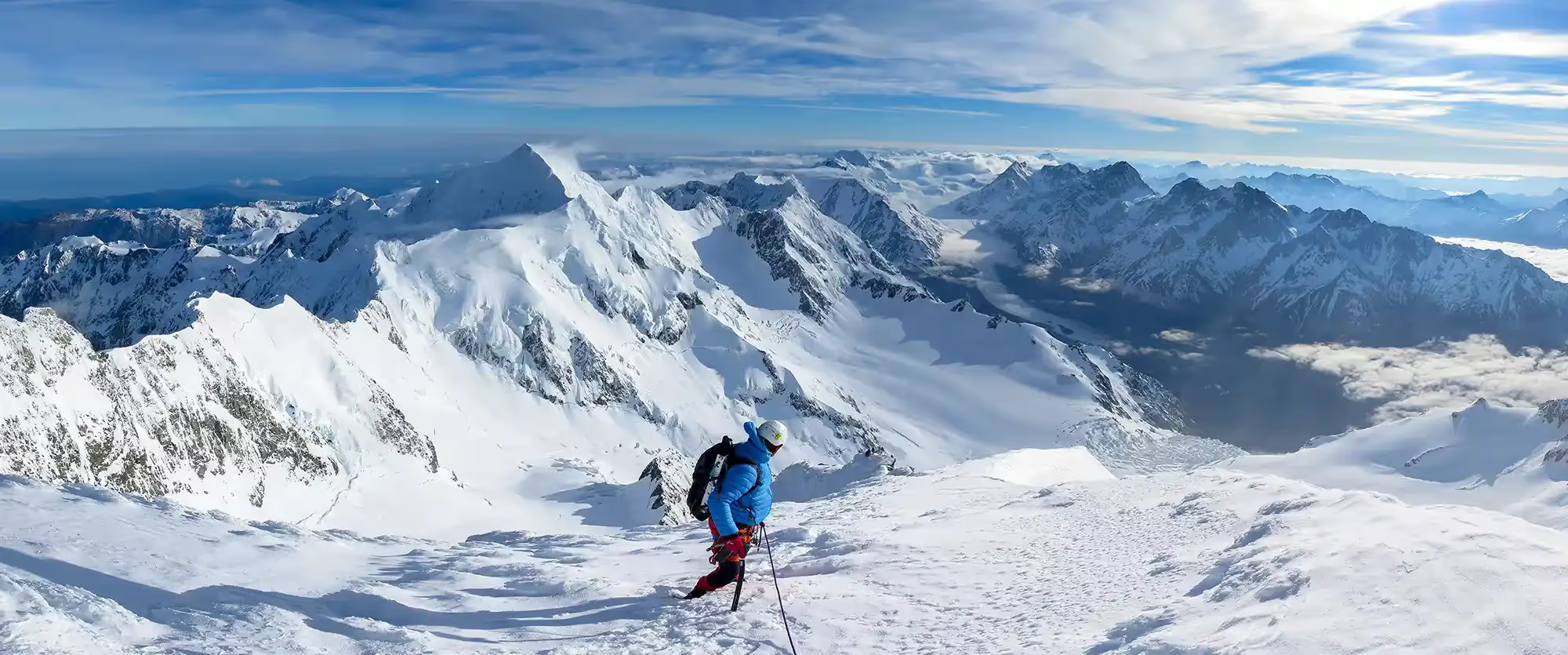
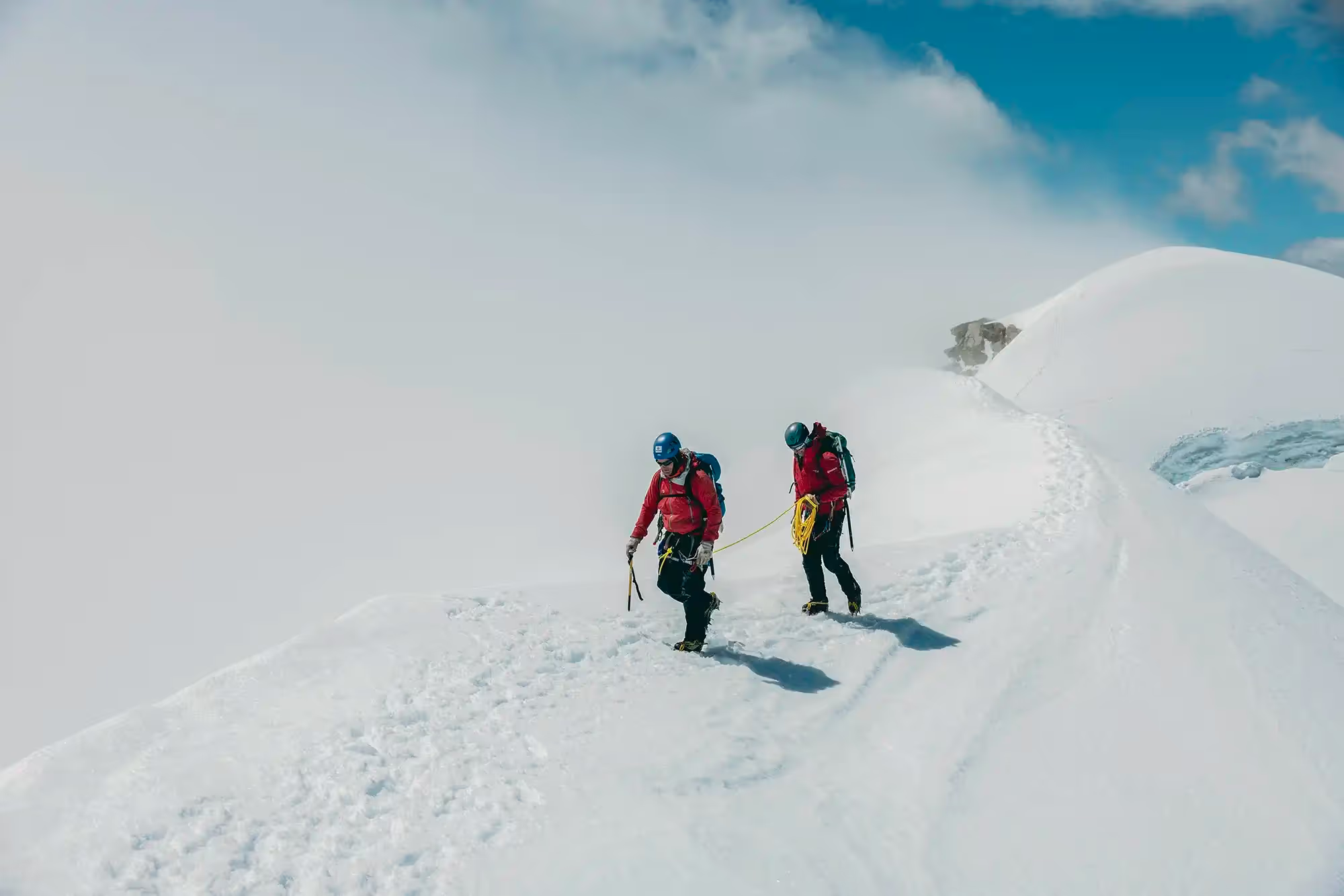
Aoraki Mount Cook climber roped up traversing snowy ridge with ice axe and crampons
The Summit of Aoraki and Ngāi Tahu

The Summit of Aoraki and Ngāi Tahu

Aoraki Mount Cook holds a special spiritual significance for the indigenous Māori people of New Zealand, and the Ngāi Tahu iwi in particular, who consider the mountain to be an ancestor, and therefore sacred.

Alpine Guides respects the wishes of the Ngāi Tahu people, and we will not guide our clients to the absolute summit of Aoraki, but stop a few steps from this point. This is, in fact, the highest safe point on the mountain.

On December 14, 1991, the High Peak of Aoraki dramatically collapsed, taking about 10 vertical metres and millions of tonnes of rock and ice down the East Face. The transformed peak is now an exposed and unstable ice arête.

The Kāti Huirapa and Arowhenua people assume responsibility as kaitiaki - guardians to Aoraki Mount Cook and the surrounding areas. Read about the significance of Aoraki to the Ngāi Tahu people.


Trip Schedule
loading departures...
Price List
Group Size
Price
1
NZ $4375
2
NZ $2675 per person
3
NZ $2100 per person
4
NZ $1775 per person

Price

NZ $11,800 per peron.

Ascents are strictly limited each season.

Contact us to discuss availability.

gear list
Trip Profile

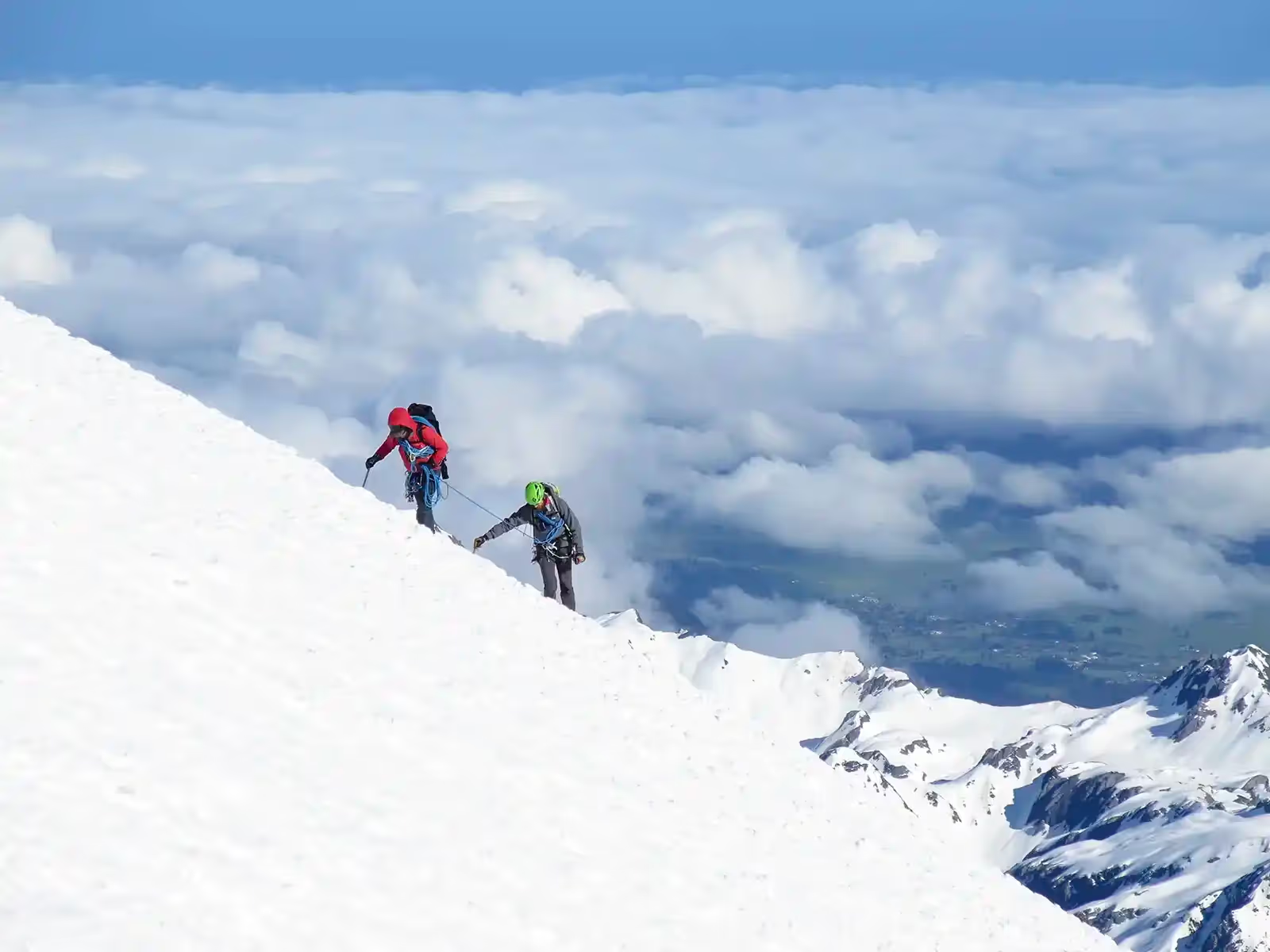
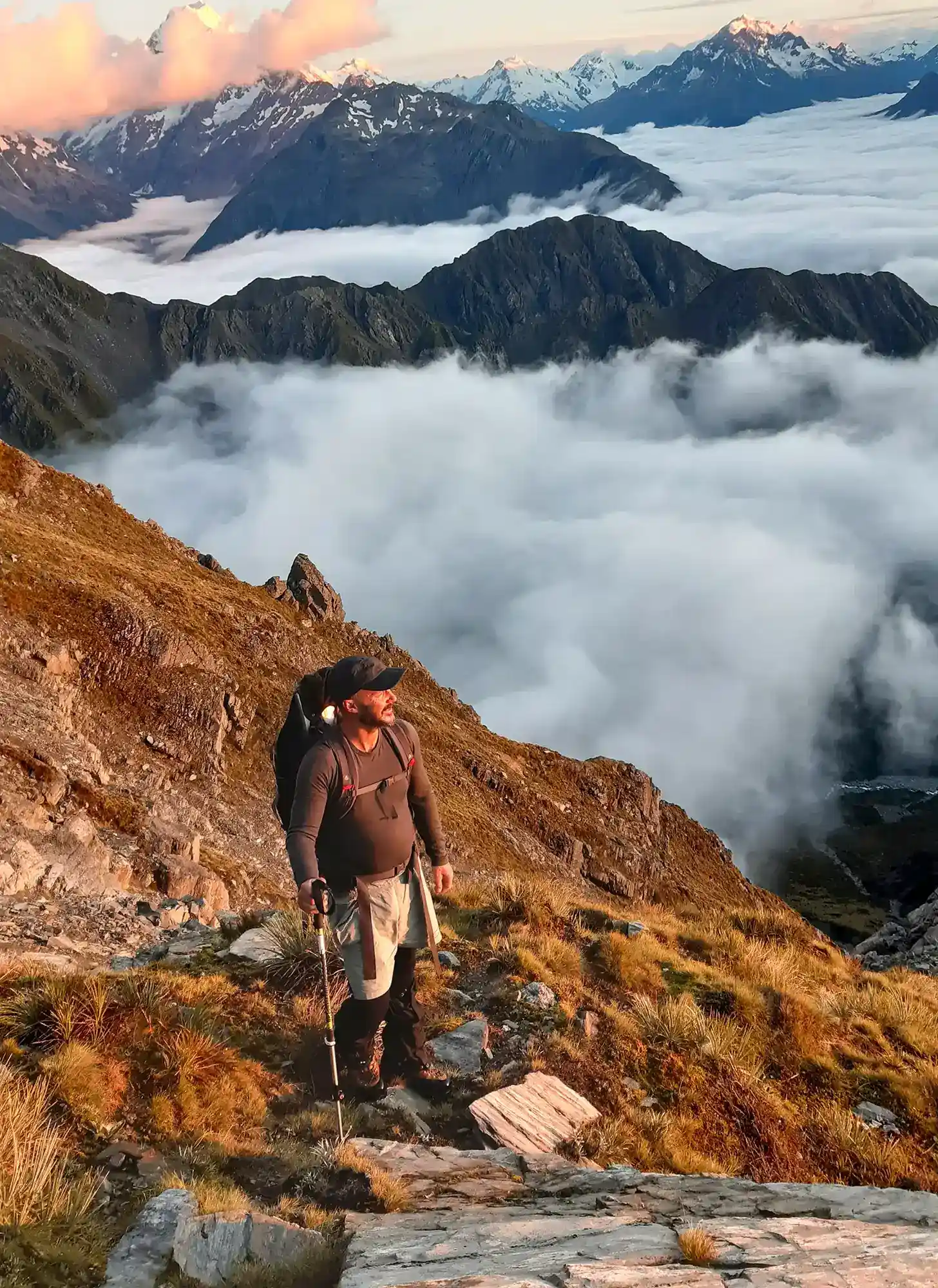
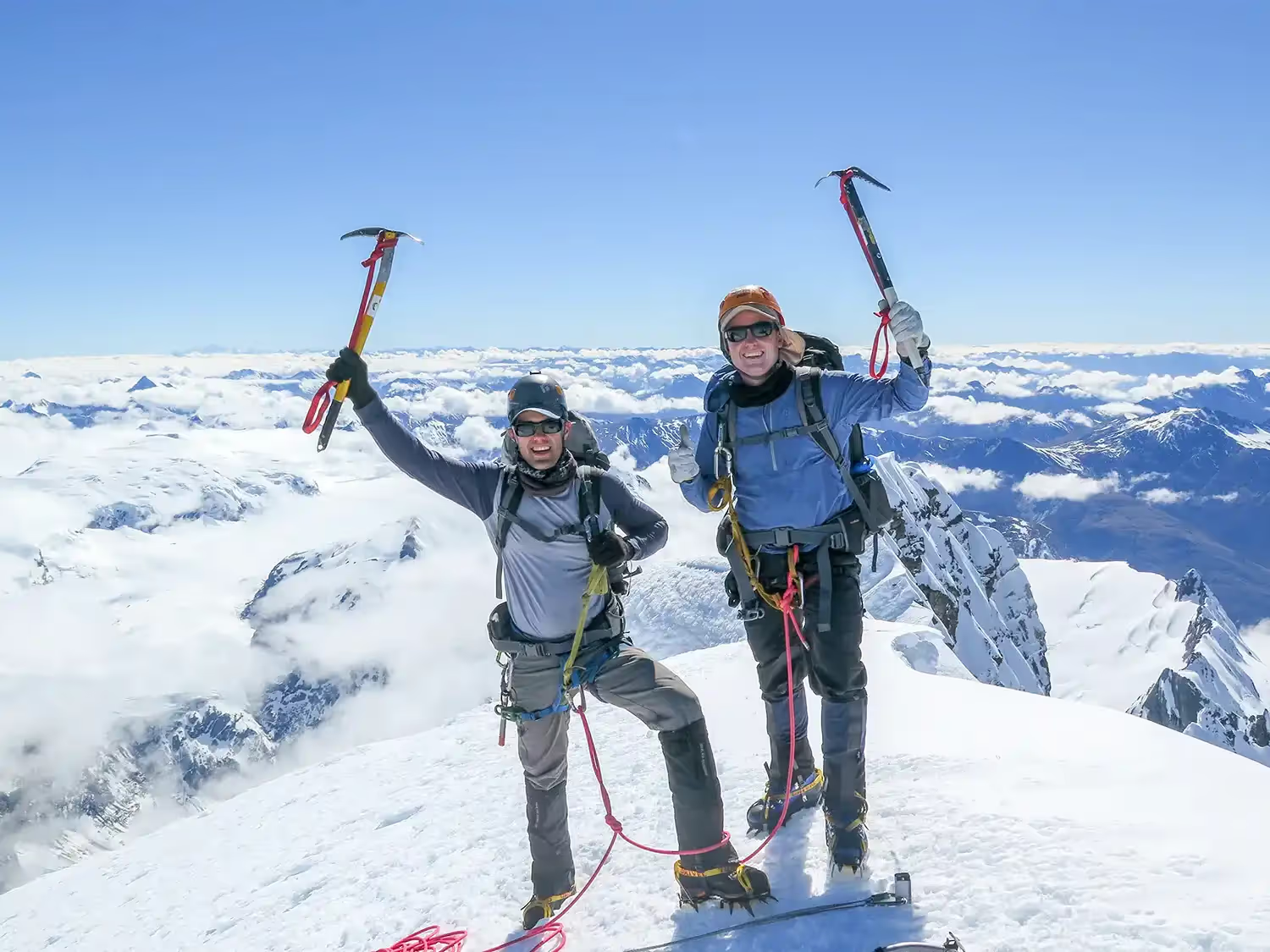
Standing Above the Clouds on Aoraki

Aoraki Mount Cook | a 6-day expedition for experienced returning guests

Standing Above the Clouds on Aoraki

Aoraki Mount Cook | a 6-day expedition for experienced returning guests

Know before you go

Plan Your Trip
What's Included
included
  • Professional NZMGA/IFMGA mountain guide on a 1:1 basis
  • All meals and snacks from lunch on day one to lunch on day six
  • Aircraft flights in and out of Plateau Hut
  • Hut fees and National Park fees
  • Local transport
  • Accommodation in Mount Cook Village (if required)
  • Technical equipment
Other Info
Skills you need

A successful ascent of Aoraki requires proven climbing proficiency, excellent physical fitness, and currency (recent alpine experience).

  • Currency - at least 14 days on crampons within the last 2 years
  • Proven experience climbing with 2 tools on 45 to 50 degrees of snow and ice
  • Proven experience of several 12+ hour days on alpine ascents (NZ alpine 2+) or equivalent - within the last 2 years
  • Glacier travel experience and the ability to competently demonstrate a crevasse rescue system
  • Rock climbing competence - climbing to Australian 14/US 5.7
  • High level of aerobic fitness - able to climb 1,000 vertical metres with an 8 kg backpack in 3.5 hours

Training for Aoraki:

  • Mountaineering proficiency is only gained experientially - by practice. Being physically fit and determined are necessary qualities for climbers.
  • Extensive crampon “mileage” in serious glaciated terrain will provide the necessary training for a safe ascent.
  • If you have Aoraki as a potential future goal (or any other serious glaciated mountain), there are plenty of ways to gain experience.  Depending on your existing experience, we are happy to advise a suitable strategy.

The essentials are:

  • A solid grounding in the basics.
  • Start with a comprehensive instruction course - for example, the Alpine Skills Course (ASC) - to give you the base competencies.
  • Alternatively, come with a friend, and we can build a Private Guided Course for you.

Development:

  • Build your experience on other peaks.
  • Follow up a course with a Private Guiding Program a Mount Aspiring Expedition, or a Technical Mountaineering Course (TMC).
  • Climb with a friend or join a club (the NZ Alpine Club, for example) to gain the required mileage.
  • During any training with Alpine Guides, your guide will advise you on potentially suitable follow-up objectives or specific areas of training to work on, and if they think you are ready for the challenge.

Take Your Time With Training:

  • We recommend taking your time to develop your skills over at least 2 or 3 climbing seasons.
  • We see a tendency for goal-oriented people to try to compress training and experience development into one season.
  • In reality, this is rarely a successful strategy. Take your time to bring success.

Common Guest Issues We Experience:

Our recommendations around training and experience attempt to mitigate these issues and allow for the best chance for a summit attempt.

Outside of weather and route conditions (which we cannot control), here are some reasons why some guests have struggled on Aoraki Mount Cook:

Lack of mountain fitness.

  • Mountain fitness is developed over time, with long days carrying moderate loads.
  • High cardiovascular fitness is important, but cycling and running do not provide the same kind of conditioning as climbing.

Not appreciating the scale of terrain and risk involved.

  • Feeling overwhelmed and not able to deal with the degree of exposure.

Unfamiliarity with the dynamics of local weather and conditions.

  • Conditions can be extremely variable, even over the space of a day, from boiler-plate ice to soft post-hole snow.
  • Accustomed with exposure to a range of climbing conditions is vital.
trip specific

Hazards

Mountaineering on the Aoraki Mount Cook massif is a hazardous activity. Although technically the “easiest” route on Aoraki Mount Cook, the Linda Glacier has a relatively high level of objective hazard (a natural hazard that we cannot control, only minimise).

The route is exposed in numerous places to avalanches, rockfall, and ice-fall danger from above. It is essential that your fitness, ability, and conditions allow you and your guide to move quickly through these hazardous zones.

  • The guide’s primary concern is always for safety.
  • Your guide’s appraisal of your competence and route conditions will determine whether the climb can be attempted, or an alternative ascent is considered instead.
  • From December onwards, the route can become heavily crevassed, before eventually becoming impassable.
  • Crevassing may slow down travel through areas threatened by ice avalanches, and can become unacceptable from a safe guiding perspective.

Climbing Season:

Climbing Season - Late October to Late December

  • The effects of climate change are evident on our mountains and have reduced the length of the climbing season for Aoraki Mount Cook over the past 3 decades.
  • It may be possible to attempt Aoraki Mount Cook later in the season (every year is different).
  • We will only accept bookings that finish before late-December (pre-Xmas).

Early Season - October through mid-November

  • Soft snow (slowing travel) and heightened avalanche risk are the major constraints of an early-season expedition.
  • A climb may be possible, but will be subject to your guide’s interpretation of the hazard level.
  • For early-season trips, it can be very helpful if you are proficient with either snowshoes or ski touring/split-board equipment.

December Onwards

  • Route conditions on parts of the Linda Glacier deteriorate as summer progresses.
  • There may be periods through the summer where the degree of crevassing and ice-cliff activity makes the route too hazardous to guide.
  • Good conditions may also extend the climbing season.
  • We always take a conservative approach to this increased risk.
Other Info

Additional Booking Conditions

These special conditions are in addition to our standard booking terms and conditions:

  • A period of 6 days is covered in the cost.
  • If you achieve the summit earlier, you have the option of retaining your guide and completing another climb, or returning to Aoraki Mount Cook village.
  • Additional climbing will be at the discretion of the guide, based on your ability and the prevailing conditions.
  • No refund is due if you choose to finish early.
  • Extensions to the package may be possible (depending on your guide’s work commitments) — this will be an additional cost of NZ$995 per day, which includes food and hut fees. You can select this when booking.
  • If the period is involuntarily extended (for example, being held at Plateau Hut by a storm), the cost is an additional NZ$795 per day.
  • It is not possible to cancel your booking for a refund due to changing route conditions.
  • An alternative objective will be proposed.
  • All itineraries are subject to change around weather and mountain conditions.

How to Book

  • All Aoraki Mount Cook reservations are made on an “on-request basis”.
  • Please contact us with your background and a potential preferred start date, and we can take it from there.

Always challenging - not to be underestimated

The Linda Glacier Route
Concession holder with Department of Conservation, authorised to operate in New Zealand’s alpine conservation areas.Kea Conservation Trust logo representing Alpine Guides’ support for Kea Conservation Trust and the protection of native alpine wildlife.Partner logo of International Federation of Mountain Guides Associations representing Alpine Guides’ alignment with international guiding standards and best practice.Partner logo of New Zealand Mountain Guides Association representing Alpine Guides’ commitment to professional guiding standards and safety.Partner logo of New Zealand Mountain Safety Council representing Alpine Guides’ commitment to mountain safety and education.Qualmark Gold Award logo recognising Alpine Guides’ commitment to exceptional quality and sustainable tourism practices.Qualworx - Safety Audit CertifiedTiaki logo representing Alpine Guides’ support for the Tiaki Promise.Alpine Guides support Trap NZ